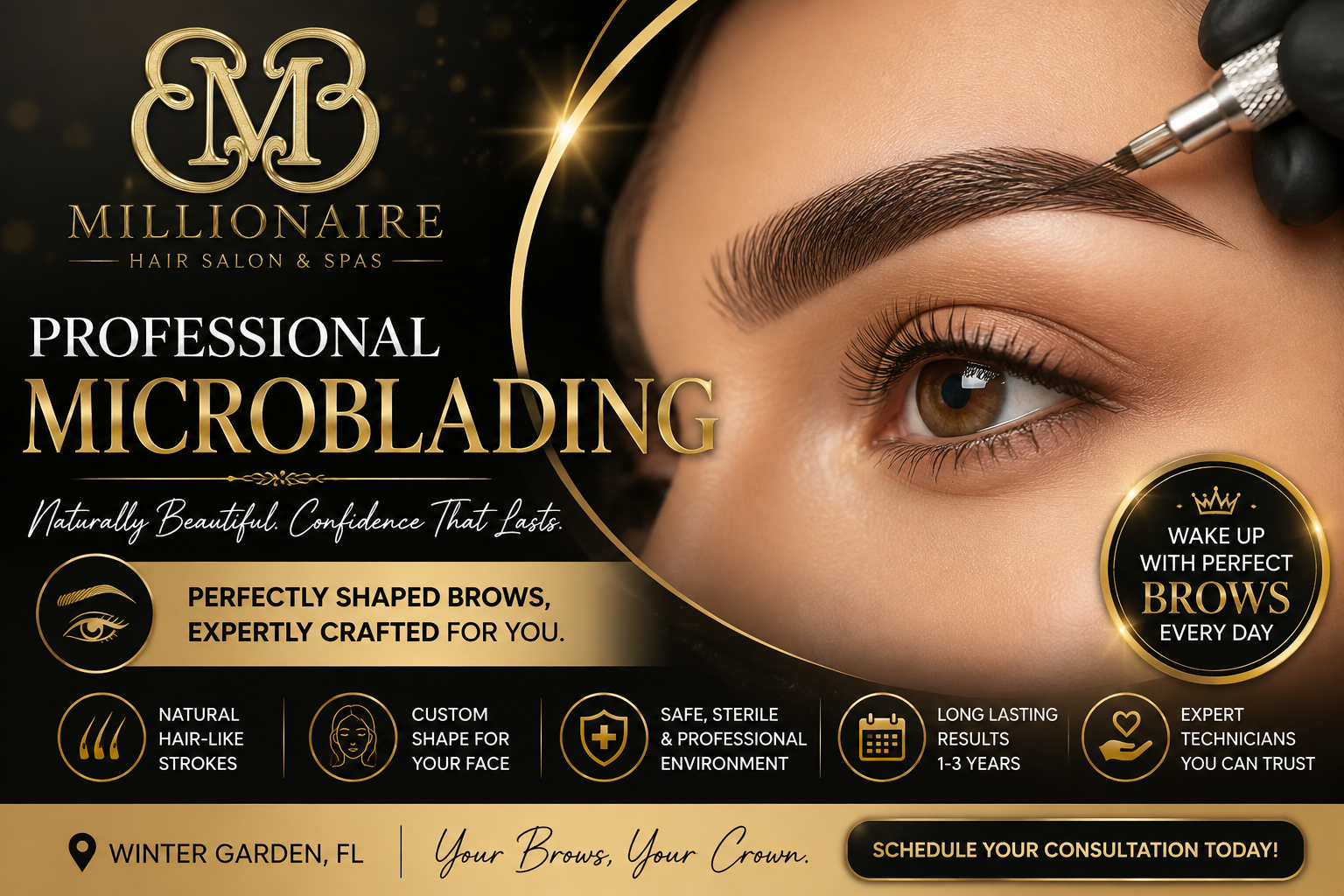
Eyebrows frame the entire face, and for clients dealing with sparse, over-plucked, or asymmetrical brows, microblading has become one of the most transformative services in the beauty industry.
But not all microblading is created equal, and the difference between a professionally trained technician and an under-qualified one shows up on your face for months, if not years.
Here is a thorough look at what microblading actually involves and why choosing a qualified professional matters more with this treatment than almost any other.
What Is Microblading, Exactly?
Microblading is a semi-permanent cosmetic tattooing technique that uses a handheld tool tipped with several tiny needles to create fine, hair-like strokes across the brow area.
Unlike a machine-driven tattoo, microblading relies almost entirely on the technician’s hand control to determine the depth, angle, and placement of each individual stroke, which is what allows the results to look like natural brow hairs rather than a solid, drawn-on shape.
The pigment is deposited into the upper layers of the skin, which is why results are considered semi-permanent rather than permanent, typically lasting between one and three years depending on skin type and lifestyle.
Why Technician Skill Makes or Breaks the Result?
Because microblading strokes are created by hand rather than by machine, the technique is remarkably operator-dependent. A skilled technician can create strokes so fine and precisely angled that they are nearly indistinguishable from natural brow hair, following your existing growth pattern and facial symmetry.
An inexperienced technician, by contrast, can create strokes that are too thick, too uniform, or poorly angled, resulting in a blocky or unnatural appearance that is difficult to correct until the pigment fades.
This is the single biggest reason to prioritize training and experience over price when choosing where to have this service done.
The Documented Benefits of Choosing a Professional
• Precise, hair-like strokes that follow your natural brow growth pattern
• A customized shape mapped to your unique facial structure and symmetry
• Sterile, single-use needle cartridges and medical-grade hygiene protocols
• A thorough consultation process, including color matching to your skin undertone
• Reduced risk of complications such as infection, patchy healing, or pigment migration
• Consistent, predictable results because reputable technicians maintain rigorous training
The Consultation and Mapping Process
A professional microblading appointment begins long before the first stroke is applied. Your technician will assess your natural brow shape, growth pattern, and facial symmetry, then carefully map out the intended shape using measuring tools and reference points unique to your bone structure.
Color is matched to your skin’s undertone and natural hair color, since pigment can shift subtly as it heals, and an experienced technician accounts for that shift when selecting the initial shade.
This mapping process typically takes as long as the actual microblading itself, which is a strong sign of a technician who prioritizes precision over speed.
| Stage | What Happens | Typical Timing |
| Consultation and mapping | Shape design, color matching, numbing applied | 30 to 45 minutes |
| Microblading application | Hand-applied hair-like strokes | 45 to 60 minutes |
| Initial healing | Color appears darker, then flakes and softens | 1 to 2 weeks |
| Full healing | Final color and texture settle in | 4 to 6 weeks |
| Touch-up appointment | Refines shape and color saturation | 4 to 8 weeks after initial session |
What Does the Healing Process Look Like?
Immediately after your appointment, brows typically appear noticeably darker and more defined than the final healed result, which surprises many first-time clients. Over the following one to two weeks, the treated area will flake and shed as the skin heals, and the color will soften considerably during this time.
A follow-up touch-up appointment, usually scheduled four to eight weeks after the initial session, allows your technician to fine-tune the shape and refine any areas where pigment retention was uneven, which is a normal and expected part of the process rather than a sign of a mistake.
Hygiene and Safety Standards Matter
Because microblading involves depositing pigment beneath the skin’s surface, hygiene protocols are not optional. Reputable professionals use single-use, sterile needle cartridges for every client, maintain a clean and sanitized workstation, and follow strict cross-contamination prevention procedures throughout the appointment.
When researching a provider, do not hesitate to ask directly about their sterilization practices and certification; a confident, transparent answer is a strong indicator of a technician who takes this responsibility seriously.
Who Is a Good Candidate for Microblading?
Microblading works beautifully for clients with sparse, thin, or over-plucked brows who want a fuller, more defined shape without committing to daily makeup application.
It is also a popular option for clients recovering from alopecia or chemotherapy-related hair loss who want to restore the appearance of natural brow hair.
During your consultation, your technician will evaluate your skin type as well, since very oily skin can affect how crisply the hair-strokes heal, sometimes making a complementary technique like powder shading a better long-term fit.
Longevity and Maintenance
Because microblading is semi-permanent rather than permanent, results gradually soften over one to three years as the body’s natural exfoliation process slowly fades the pigment. Sun exposure, skincare routines involving strong exfoliating acids, and individual skin turnover rate all influence how long your results last.
Most clients return for a touch-up appointment on a yearly or bi-yearly basis to maintain crisp, fresh-looking brows rather than allowing the color to fade completely before their next visit.
Microblading Compared to Powder Brows and Other Options
Clients researching brow enhancement often find themselves choosing between microblading and powder brows, and understanding the distinction helps clarify which is the better fit for professional needs.
Microblading, applied with a hand-held tool, creates fine, individual hair-like strokes and tends to suit clients seeking a soft, natural, undone look, particularly those with drier skin types where the fine strokes heal crisply.
Powder brows, applied with a machine, deposit pigment in a soft, shaded gradient similar to makeup, and tend to hold up better on oilier skin types where fine hair strokes might otherwise blur over time. Many clients ultimately opt for a hybrid approach that combines both techniques, achieving fullness and natural texture simultaneously.
| Technique | Application Method | Ideal Skin Type |
| Microblading | Hand-held tool, individual strokes | Normal to dry skin |
| Powder or ombre brows | Machine, soft shading | Oily or combination skin |
| Hybrid brows | Combination of both methods | Most skin types, especially those wanting fullness with texture |
What to Ask Before Booking Your Appointment?
Before committing to any provider, it is worth asking a few direct questions that reveal their level of training and professionalism. How many years of experience do they have specifically with microblading, as opposed to other forms of permanent makeup?
Can they show a portfolio of healed results, not just fresh, same-day photos, since healed results tell a far more accurate story of their work? What certifications do they hold, and are those certifications current?
A confident, transparent, detailed answer to each of these questions is one of the clearest indicators that you are in capable hands, while vague or evasive responses are worth taking seriously as a warning sign.
• Ask to see healed results at the four to six week mark, not just fresh photos
• Confirm current certification and ongoing training in microblading specifically
• Ask about their process for color matching and shape mapping
• Confirm sterilization protocols and single-use needle cartridges
• Discuss realistic healing expectations and touch-up scheduling upfront
Bottom Line
Microblading is a genuinely transformative service when performed by a properly trained professional, delivering natural, hair-like brows that follow your unique facial structure and hold up beautifully through your daily routine.
The difference between an average result and an exceptional one almost always comes down to the technician’s skill, training, and attention to hygiene, which is why choosing an experienced professional is worth prioritizing over convenience or price.
Schedule a microblading consultation at Millionaire Hair Salon in Winter Garden, where our trained specialists take the time to map, match, and craft brows built specifically for your face.