
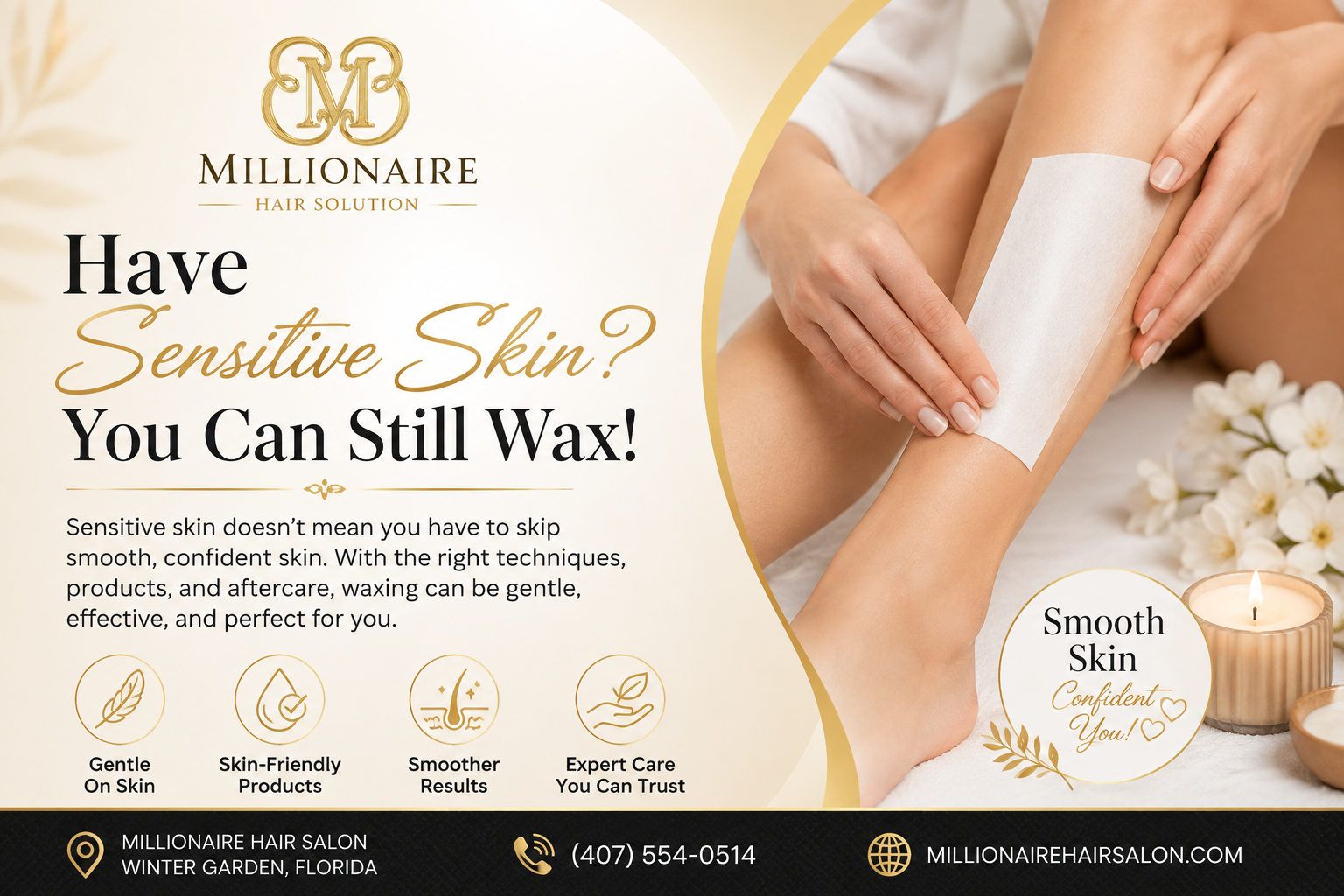
Sensitive skin sends plenty of clients away from waxing and toward less effective hair removal methods out of fear of redness, bumps, or irritation. The good news, backed by both dermatological guidance and professional waxing best practices, is that sensitive skin is not a disqualifier for waxing.
It simply requires a more thoughtful approach, from the products used to the technique applied to your aftercare routine.
Here is what a truly sensitive-skin-friendly waxing experience looks like, and how to make sure your next appointment leaves you smooth rather than irritated.
Why Sensitive Skin Reacts Differently to Hair Removal?
Sensitive skin has a naturally weaker barrier function, which means it is more prone to inflammation, redness, and irritation when exposed to friction, heat, or certain ingredients. This is true across almost every hair removal method, not just waxing, but the reaction is often more visible after waxing simply because the treatment is more thorough.
The encouraging part is that most of the irritation associated with waxing on sensitive skin comes down to technique and product choice rather than the fundamental process itself.
Why Waxing Can Actually Be Better for Sensitive Skin Than Shaving?
Because waxing removes hair from the root rather than cutting it at the surface, hair grows back finer and less coarse over time, and many clients notice a meaningful drop in hair density after several consistent sessions.
This reduced density means fewer follicles working their way back through the skin, which lowers the long-term risk of ingrown hairs and irritation compared to shaving, which creates blunt-edged hairs that are more prone to curling back into the skin.
Regular waxing clients also tend to report less overall irritation over time than those who rely on daily or near-daily shaving.
Choosing the Right Wax Formula for Sensitive Skin
Not all wax is created equal, and this matters enormously for sensitive skin. Hard wax, which is applied without a strip and removed once it hardens, tends to grip the hair itself rather than the surrounding skin, making it gentler and more effective for sensitive or reactive areas.
Look for a salon that specifically uses formulas designed for sensitive skin types and can walk you through what ingredients are in their wax before your appointment.
• Ask whether the salon offers a hard wax formulated for sensitive or reactive skin
• Request a patch test before your first full appointment if you have a history of reactions
• Confirm the salon uses fresh applicators and single-use materials for every client
• Mention any skincare products, medications, or recent treatments that may increase sensitivity
Preparing Your Skin Before an Appointment
| Preparation Step | Why It Matters | Timing |
| Gentle exfoliation | Removes dead skin cells so wax grips hair, not skin | 24 to 48 hours before waxing |
| Confirm hair length | Wax needs roughly a quarter inch of growth to grip effectively | Before booking |
| Cleanse the area | Removes oils and bacteria that can interfere with wax adhesion | Day of appointment |
| Avoid retinoids or acids | Reduces risk of over-sensitized, reactive skin | 48 hours before waxing |
| Schedule around your cycle | Hormonal shifts can heighten sensitivity | Mid-cycle when possible |
Gentle exfoliation in the day or two before your appointment helps the wax grip the hair itself rather than a layer of dead skin cells, which leads to a cleaner pull and less repeated passing over the same area, a major contributor to irritation.
It is also worth avoiding strong exfoliating acids or retinoid products in the two days leading up to your appointment, since these can leave skin more reactive than usual.
What Happens During a Sensitive-Skin-Friendly Wax?
A thoughtful esthetician working with sensitive skin will apply wax in the direction of hair growth and remove it against the grain in one quick, confident motion while holding the skin taut.
This technique minimizes trauma to the skin and ensures a clean removal on the first pass, reducing the need to go back over the same area, which is often where irritation compounds. Estheticians experienced with sensitive skin also tend to work in smaller sections, allowing better control and a gentler overall experience.
Aftercare That Prevents Irritation and Ingrown Hairs
The hours immediately following a wax matter as much as the service itself. Heat, moisture, and friction are the three biggest irritants for freshly waxed, sensitive skin, since they can increase blood flow and inflammation in an area that is already sensitized.
Avoiding intense workouts, hot showers, saunas, and tight clothing for at least a day after your appointment gives your skin the space it needs to calm down and heal properly.
• Stick to lukewarm water and avoid saunas or steam rooms for 24 hours
• Skip intense workouts the day of your appointment to reduce sweat and friction
• Wear loose, breathable clothing over freshly waxed areas
• Apply a soothing, fragrance-free moisturizer or aloe-based gel
• Begin gentle exfoliation again after 48 hours to help prevent ingrown hairs
• Avoid touching the treated area to minimize the risk of bacteria transfer
Common Waxing Myths for Sensitive Skin, Debunked
A great deal of hesitation around waxing for sensitive skin stems from outdated information or a single bad past experience rather than the treatment itself. One persistent myth is that sensitive skin will always react badly to waxing, when in reality most reactions trace back to low-quality wax, rushed technique, or skipping proper aftercare rather than an inherent incompatibility.
Another common misconception is that more frequent waxing worsens sensitivity over time; in truth, many clients find their skin becomes progressively less reactive with consistent, properly spaced sessions, as hair grows back finer and follicles become less prone to irritation.
A third myth worth addressing directly is the belief that numbing creams or over-the-counter pain relievers are necessary to make waxing tolerable for sensitive skin.
While some clients do choose to use a gentle topical numbing product, a skilled esthetician working with proper technique, appropriate wax temperature, and correct hair length can make the experience comfortable without additional intervention for the vast majority of clients.
If discomfort feels disproportionate to what your esthetician describes as typical, that is worth discussing openly rather than assuming it is simply the nature of waxing for sensitive skin.
• Myth: Sensitive skin cannot tolerate waxing at all. Truth: technique and product quality determine most reactions.
• Myth: Frequent waxing worsens sensitivity. Truth: consistent waxing often reduces irritation over time as hair thins.
• Myth: Numbing products are required for sensitive skin. Truth: proper technique alone is usually sufficient for comfort.
• Myth: All wax formulas are interchangeable. Truth: hard wax is generally gentler for reactive or sensitive areas.
Communicating With Your Esthetician
The single most effective tool for a comfortable waxing experience on sensitive skin is honest, upfront communication. Let your esthetician know about any skin conditions, recent treatments, medications such as retinoids or certain antibiotics that can increase photosensitivity, and any past reactions to waxing or other hair removal methods before your appointment begins.
This information allows your esthetician to adjust wax temperature, technique, and product choice proactively rather than reactively, which meaningfully reduces the likelihood of irritation during and after your service.
Bottom Line
Sensitive skin does not have to mean giving up on waxing. With the right wax formula, proper pre- and post-appointment care, and an esthetician experienced in working with reactive skin types, waxing can be a smooth, effective, and genuinely comfortable hair removal method.
At Millionaire Hair Salon in Winter Garden, our waxing and sugaring specialists are trained to work with every skin type, adjusting technique and products to keep your experience as gentle as your results are smooth.
Book your consultation today and let us show you what waxing feels like when it is done right for your skin.